





Primary Disclaimer: Eddie, co-writer of this review, is a former employee of a company that makes premium theater concession products, and he worked there while this movie was one of their projects.
Secondary Disclaimer: He wouldn't have that job, or be the person he is today, if he didn't see Toy Story in 1995, when he was 3.
It's the sequel we didn't want but didn't know we needed.
Like a lot of people (I would assume), I winced when it was announced that there would be a Toy Story 5. Years later, I saw the trailer, and I changed my opinion a bit, but still had reservations, as the plot of "Toys vs Tech" could be a simple, but effective, PSA on Disney+. Once I learned Taylor Swift was involved, I was all in.
My Swiftie heart burst at the thought of hearing her latest No. 1 hit, and the first No. 1 for a Pixar movie, "I Knew It, I Knew You," during an all-timer montage. I left the theater a tad disappointed that I didn't get to see Jessie prancing along to a song written so beautifully for her, but I was happy, so I stayed anyway.
The song feels like a satisfying sequel, almost, to the Oscar-nominated Sarah McLachlan tearjerker "When She Loved Me" that played in "Toy Story 2," famously. Read on for why that is the case.
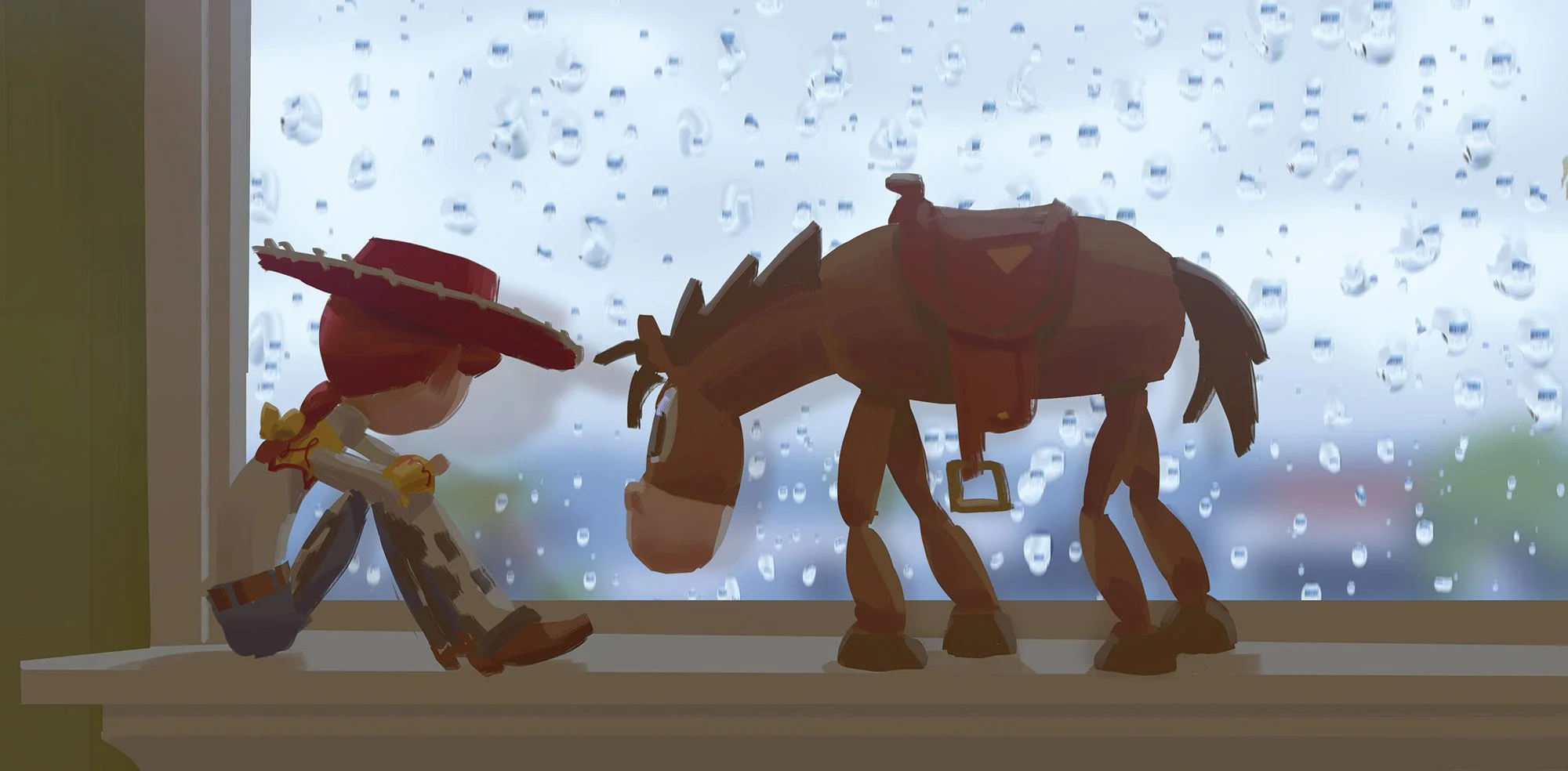
For those who have watched the trailer, you've probably gathered that the beloved gang of Woody, Buzz, Jessie, and the like are dealing with the looming, existential threat of technology. Given how long the issue of kids and technology has loomed, it makes you wonder why it took this long for this series, or any film, for that matter, to address this topic so eloquently.
The crux of the film's plot surrounds eight-year-old Bonnie's (Scarlett Spears) realization that she can no longer connect with her peers due to being technologically behind. To get her to make friends, Bonnie's parents reluctantly invest in a tablet known as Lilypad (Greta Lee). For those who remember LeapFrog, low-tech Lily-Leapfrogs are, in-fact, a very real tie-in product for kids who are between 5-8. Keep that in mind.
In the short term, Bonnie becomes addicted to the technology and starts exclusively connecting with her friends through it, leaving her beloved toys in the dust.
Bonnie's main toy pal at this point in the series is, of course, Jessie The Yodeling Cowgirl (Joan Cusack). When Jessie senses that she and the rest of the gang are being abandoned for this shiny new piece of technology, she embarks on her own journey to reconnect with her owner.
While Lilypad may originally present as a villain, she turns out to be a more amiable character than expected, as she is concerned about Bonnie as the rest of the toys are. At first, it makes you wonder why the creators didn't present her as an ominous presence, given how fearful the toys are of technology when they first discover it...then you remember the Leapfrog (and that Pixar's origins are inextricably linked to Steve Jobs).
Captain Midnight noted this in his review, and thought Lily should go full villain like the big bads of the second and third movie. I'm of two minds here. Basically the movie we got is good filmmaking, but untrue to the real world of tech addiction that we're in. If we were to see Bonnie throw a tantrum because she has her tablet taken away, the movie would be as rough to rewatch as seeing a real kid going through screen withdrawal. I think the solution is not to make Lily the villain, but her manufacturer. Make her default programming be (unknowingly) enabling tech addiction and data harvesting like we know companies like Meta are, and then make her in need of de-programming like Buzz had to be in the first movie. A mix of well-intentioned, as she claims in the actual movie, but harmful to Bonnie.
Woody (Tom Hanks) makes a triumphant return from the fourth film (with a balding head) when Jessie summons him via a walkie talkie to help Jessie find her way back to Bonnie. Then, Jessie and Bullseye stowaway in her suitcase en route to a sleepover with Bonnie's new friends. When Bonnie shows off her toys to her new pals, they all look in scorn, leaving Jessie and Bullseye dejected.
Jessie and Bullseye then find themselves with an elderly couple, who uses the address of Jessie's former owner Emily (get ready to cry) to return the left behind toys.
For the rest of the film, Jessie essentially goes on a journey akin to the one she experienced in the second film, as she mingles with a group of forgotten toys left in the shed of the farmhouse that Emily once resided in. They include potty training device Smarty Pants (Conan O'Brien-providing the same kind of sarcastic joy we know him for), GPS hippo Atlas (Craig Robinson) and digital toy camera Snappy (Shelby Rivera). She then discovers the human daughter residing in this farmhouse, a young girl named Blaze (Mykal-Michelle Harris), prompting her to introduce Blaze to Bonnie.
The two girls then befriend, allowing Jessie to spend more time in the farmhouse, where she discovers an old lunchbox hiding late 20th-century objects and a photo of an adult Emily with her daughter named (you guessed it, and get ready to cry again).
The film ends with a staged wedding between Jessie and Buzz Lightyear (Tim Allen, who also voices 50 high-tech, and high-flying, Buzzes in "demo and drone" mode) hosted by Bonnie and Blaze, before cutting into a potential future Oscar-winning song in the credits (and credits that feature friendship bracelets for Bonnie and Blaze, naturally). If the Emily revelation isn't enough for you, Woody and the original Buzz "flying in style," surely will make you cry.
While this movie initially seemed unnecessary, it remains as simultaneously poignant and fun as its predecessors. Pixar pulls off the impossible with this film, a sequel that manages to match what came before. If we must have a Toy Story 6, as the box office demands, hopefully they do the same the next time around.




0 comments:
Post a Comment